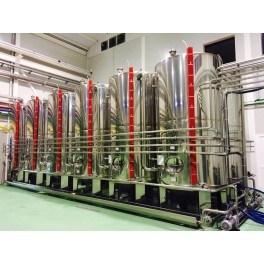
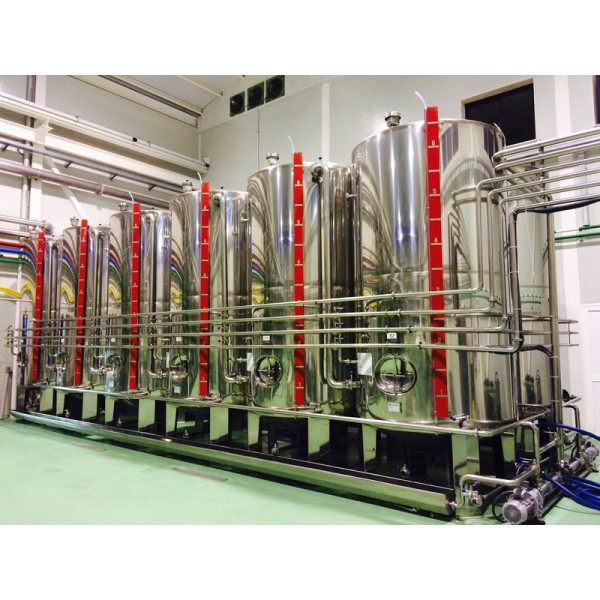
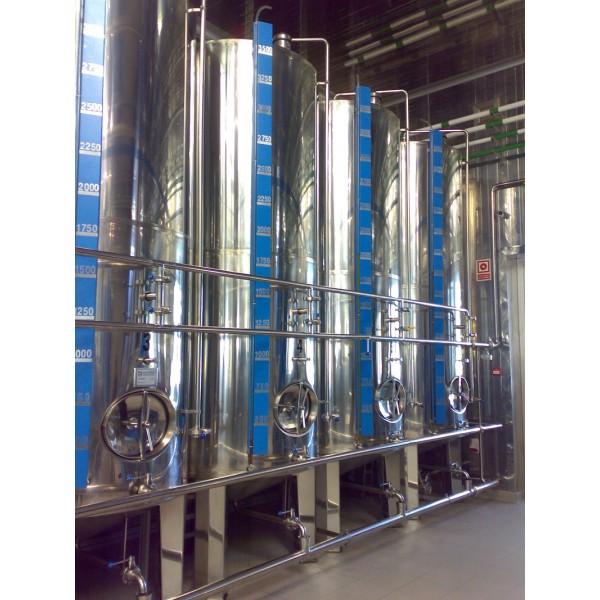
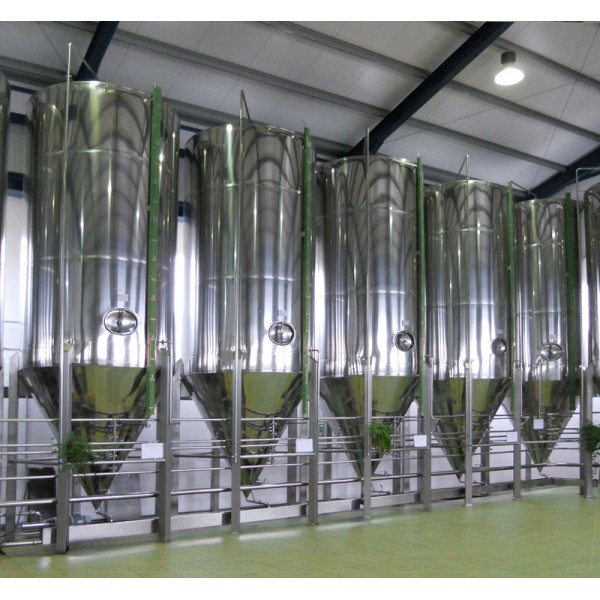
We have various decanting systems adaptable to the needs of the client CONSULT.
Decanting is used to separate heterogeneous mixtures, which may be formed by a liquid substance and a solid substance, or by two liquid substances of different densities.
The decantation in the olive oil extraction process consists of the oil-water-solids separation, the latter being the pulp and bone residues of the olive that have not been completely separated from the liquid phase in the decanter.
Olive oil, separated from the paste in the decanter, passes through the vertical centrifuge that removes the “fine” (particles of skin and bone from the olive) and the remains of vegetation and washing water that may remain.
Microparticles will remain in suspension (<0.05%), of skin and pulp. These microparticles are not detected in the mouth but reinforce the taste and olfactory sensations. The result will be, after decantation, the virgin olive oil.
Over the months, these microparticles will deposit themselves and virgin olive oil will acquire its transparency. If we want to speed up this process, we will have to filter the oil.
Olive oil, once centrifuged, passes to the decantation tanks.
In general, the decantation that aims to separate a small percentage of water and purges after centrifugation can be carried out in conical bottom tanks of 15% inclination, and if the decantation will separate the resulting product after the decanter, cylinder deposits would be necessary conical with at least 50% inclination.
In InVIA we have extensive experience in both types of deposits and we can advise you on your choice as well as the total volume you need based on your production capacity and other important data to consider.
 en
en es
es  fr
fr  ca
ca